
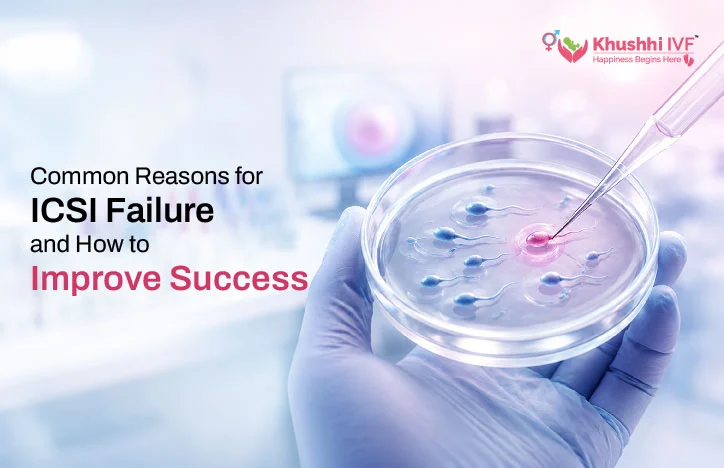
For many couples, the hope is that their first ICSI cycle will lead to the long-awaited news of a successful pregnancy. However, ICSI does not always result in pregnancy on the first attempt. If your initial ICSI cycle has not delivered the outcome you were hoping for, understanding the possible reasons for failure can help you make informed decisions about the next steps. With the right evaluation, expert guidance, and a personalised treatment approach, your fertility specialist can help identify potential challenges and plan the way forward. ICSI (Intracytoplasmic sperm injection) Treatment is an advanced fertility treatment during which the doctor chooses one of the healthy sperm and directly injects it into a mature oocyte to support fertilisation.
Failure is never the end, and there is hope. What else could happen and contribute to failure in an ICSI cycle is mentioned in this blog.
What Is ICSI Treatment and Why Can It Fail?
ICSI is generally used in conjunction with fertilisation issues concerning sperm. ICSI is usually used where issues with the sperm pose a barrier to normal fertilisation. ICSI procedures may be performed in cases of a low number of and/or decreased motility of sperm, if sperm are surgically removed and in cases of previously failed fertilisation.
Although the sperm may have penetrated the egg, the resulting embryo still needs to grow properly and attach to the uterine lining to result in a pregnancy. So while ICSI can bypass some steps in the process of fertilisation, it still won’t fix everything that interferes with pregnancy.
Common Reasons for ICSI Treatment Failure
1. Poor Egg Quality
Egg quality plays an important role in embryo development. Age is one factor associated with declining egg quality, but ovarian reserve and individual reproductive health can also influence the response to treatment.
Sometimes, several eggs may be collected but only a smaller number are mature or suitable for fertilisation.
2. Sperm Quality
ICSI uses one selected sperm for each mature egg, but sperm quality still matters. Problems with sperm movement, shape or DNA integrity can affect fertilisation and embryo development.
A detailed semen evaluation can help the fertility specialist understand whether male-factor issues may have contributed to the previous outcome.
3. Embryo Development Problems
Successful fertilisation does not automatically mean that an embryo will continue developing normally. Some embryos may stop developing during the laboratory culture stage.
Embryo quality can be influenced by both egg and sperm factors. In selected cases, doctors may discuss additional genetic evaluation depending on the couple’s history.
4. Uterine or Endometrial Factors
Sometimes the embryo may develop well, but implantation may not occur. Conditions affecting the uterus or endometrial lining can sometimes play a role.
Before another transfer, your fertility specialist may review:
- Endometrial thickness
- Uterine structure
- Fibroids or polyps
- Previous implantation history
- Hormonal factors
A proper evaluation can help identify whether anything needs attention before the next transfer.
How Can You Improve Your Chances?
There is no guaranteed method for making an ICSI cycle successful. However, reviewing the previous cycle carefully can help your doctor make better decisions for the next attempt.
Review the Previous Cycle
Ask your fertility specialist where the cycle stopped progressing. Was there a low response to stimulation? Were the eggs immature? Did fertilisation occur? How did the embryos develop?
These details can provide much more useful information than simply looking at whether the pregnancy test was positive or negative.
Follow Your Treatment Plan Carefully
Medication timing, monitoring appointments and procedures are important parts of assisted reproduction. Follow your fertility team’s instructions closely and discuss any concerns before changing or stopping medication.
Focus on Overall Health
A balanced diet, regular physical activity, adequate sleep and avoiding smoking can support general reproductive health. Men and women should also discuss alcohol, medications and supplements with their doctor before treatment.
Choose the Right Fertility Centre
Experience, laboratory facilities, embryology support and personalised treatment planning can all matter when choosing a fertility centre. Khushhi IVF provides fertility services, including IVF, ICSI, reproductive genetics, infertility assessment and related treatments.
The icsi treatment price can also vary depending on the treatment plan, medicines, investigations and additional procedures required. Instead of comparing clinics only on price, couples should understand exactly what is included in the treatment package.
What Should You Do After an Unsuccessful ICSI Cycle?
Even a failure is a phase of the cycle and it teaches you a great deal. You could meet your doctor, discuss test results, ovarian response, fertilisation rate, embryo development and also uterine factors, if applicable, and then plan for the next cycle.
The planning at Khushhi IVF is unique to each couple. It’s not about the same cycle just repeated, but a better cycle, built on the experiences and learnings from the last cycle.
ICSI can be the best answer for a range of infertility issues such as failing to achieve fertilisation due to male infertility factors. However, as with all fertility treatments, this cannot guarantee conception on your first cycle.
If your first cycle was unsuccessful, do not lose hope. A detailed review with an experienced fertility specialist can help identify possible reasons and determine what may be appropriate for your next step.
FAQs
1. Can ICSI fail even when fertilisation happens successfully?
Yes, ICSI may fail because embryo development, implantation, egg quality, and uterine factors also influence pregnancy outcomes.
2. Does age affect ICSI success rates?
Yes, increasing maternal age can affect egg quality and reduce the likelihood of developing healthy embryos.
3. Can another ICSI cycle be successful after one failure?
Yes, another cycle may succeed after doctors review previous results and adjust treatment according to individual needs.
4. What tests may be recommended after ICSI failure?
Doctors may recommend hormonal, semen, uterine, genetic, or other tests depending on the previous cycle’s outcome.