
If you’ve been trying to conceive for more than two years, you probably know this feeling all too well. Every month begins with hope, followed by waiting, questioning, and sometimes disappointment. Friends and family may offer advice, while social media seems filled with pregnancy announcements. It can feel exhausting and lonely.
If this sounds familiar, please know that you are not alone. Fertility challenges affect both men and women, and understanding your fertility timeline can help you make informed decisions while feeling more in control of your journey.
What Is a Fertility Timeline?
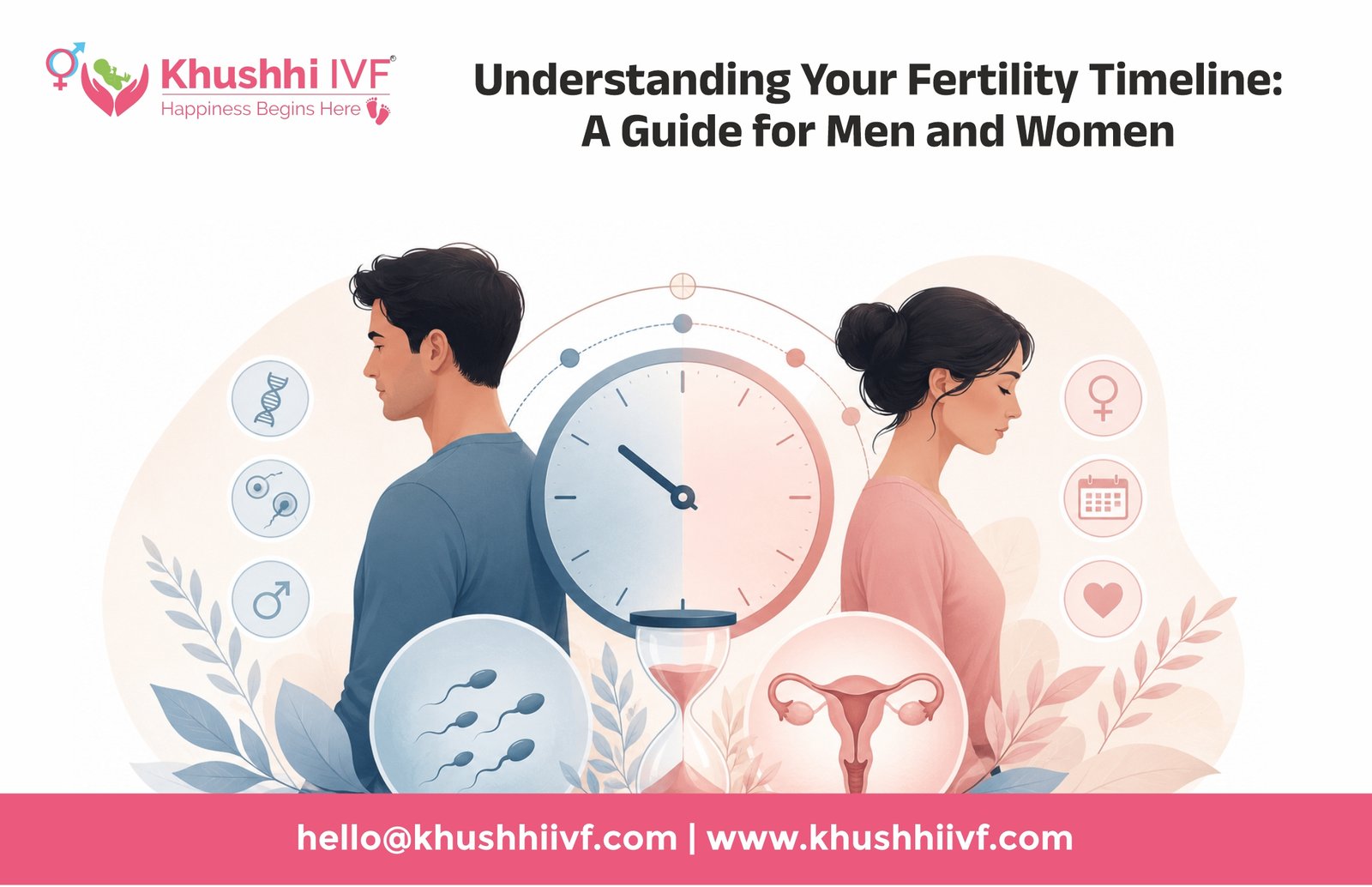
A fertility timeline is simply the sequence of events that need to happen for pregnancy to occur.
Think of it like a relay race. Each step must happen at the right time, and the baton needs to be passed smoothly from one stage to the next.
These stages include:
- Healthy egg development
- Ovulation (release of the egg)
- Healthy sperm reaching the egg
- Fertilization
- Implantation of the embryo in the uterus
When any one of these steps is delayed or disrupted, conception can become more difficult.
Understanding the Female Fertility Timeline
- Follicular Phase: The body prepares several eggs, but usually one becomes mature enough for ovulation.
- Ovulation: The ovary releases the mature egg.
- Luteal Phase: After ovulation, the body prepares the uterus for a possible pregnancy.
Understanding the Male Fertility Timeline
Fertility is not only a woman’s responsibility. Male factors contribute to a significant percentage of infertility cases.
Sperm production is an ongoing process that takes about two to three months from start to finish.
For conception to occur, sperm need:
- Good count
- Healthy movement
- Normal shape
- Strong genetic quality
Lifestyle factors such as smoking, excessive alcohol consumption, poor sleep, chronic stress, and certain medical conditions can affect sperm health.
This is why fertility evaluations often involve both partners from the beginning.
Why Two Years of Trying Matters
If you’ve been trying to conceive for over two years, it’s understandable to feel frustrated or worried.
The good news is that many fertility challenges can be identified through proper testing and evaluation.
Common factors may include:
- Ovulation disorders
- Blocked fallopian tubes
- Endometriosis
- Polycystic Ovary Syndrome (PCOS)
- Reduced egg reserve
- Male factor infertility
- Unexplained infertility
“Unexplained” does not mean “untreatable.” It simply means the cause is not immediately obvious through standard testing.
The Emotional Side of the Timeline
The Two-Week Wait
Many couples describe the time between ovulation and pregnancy testing as one of the hardest parts of the journey.
Every symptom can feel significant.
Every day feels longer.
This emotional rollercoaster is completely normal.
You may feel hopeful one moment and discouraged the next. Give yourself permission to experience those emotions without judgment.
Taking Care of Yourself
While fertility treatment focuses on the physical aspects of conception, emotional well-being matters too.
Consider:
- Talking openly with your partner
- Limiting overwhelming online searches
- Seeking support from trusted friends or counselors
- Making time for activities that bring you joy
Your fertility journey should not define your entire life.
A Gentle Next Step
If you and your partner have been trying to conceive for more than two years, you do not have to carry the uncertainty alone. Understanding your fertility timeline can provide clarity, direction, and hope.
Our team is here to listen, answer your questions, and guide you through your options with compassion and care. If you’re ready to learn more, we warmly invite you to schedule a consultation and take the next step at your own pace.
FAQs
1. At what age is fertility highest for women?
Women’s fertility is generally highest in their 20s and gradually starts declining after the age of 30. The decline becomes more significant after 35 due to a reduction in both the number and quality of eggs.
2. Does male fertility decline with age?
Yes. While men can remain fertile for many years, sperm quality, motility, and DNA integrity gradually decline after the age of 40, which may affect conception and pregnancy outcomes.
3. What factors can affect fertility in both men and women?
Several factors can influence fertility, including age, lifestyle habits (smoking, alcohol, obesity), stress, hormonal imbalances, medical conditions like PCOS or endometriosis, low sperm count, infections, and certain medications.
4. When should a couple consult a fertility specialist?
Couples should consider consulting a fertility specialist if they have been trying to conceive for:
- 12 months if the woman is under 35 years of age.
- 6 months if the woman is 35 years or older.
Immediate consultation is recommended if either partner has known fertility-related medical conditions.
5. Can lifestyle changes improve fertility?
Yes. Maintaining a healthy weight, eating a balanced diet, exercising regularly, managing stress, getting adequate sleep, avoiding smoking and excessive alcohol, and treating underlying health conditions can significantly improve fertility for both men and women.