
For many couples, pregnancy takes longer than they anticipate. Usually, the first stage is to determine why. Infertility may be linked to problems with ovulation or sperm quality.
In certain situations, an IUI treatment may be proposed by the fertility expert. It is considered one of the simplest fertility techniques and may be suggested before progressing to something like an IVF treatment.
IUI stands for intrauterine insemination. In simple terms, this means that around the time you ovulate, prepared sperm are placed in your uterus, hoping that shortening the distance between sperm and egg will increase their chances of meeting.
Who Can Consider IUI?
IUI is not meant for every fertility problem. Before suggesting it, a doctor generally looks at the couple’s medical history and fertility test results.
It may be considered when there is:
- Unexplained infertility
- Mild problems with sperm count or movement
- Irregular or absent ovulation
- Difficulty with sexual intercourse
- A need to use donor sperm
- Certain cervical factors affecting conception
The health of the fallopian tubes is also important because the egg and sperm still need to meet naturally inside the body. If the tubes are blocked, IUI may not be the most suitable option.
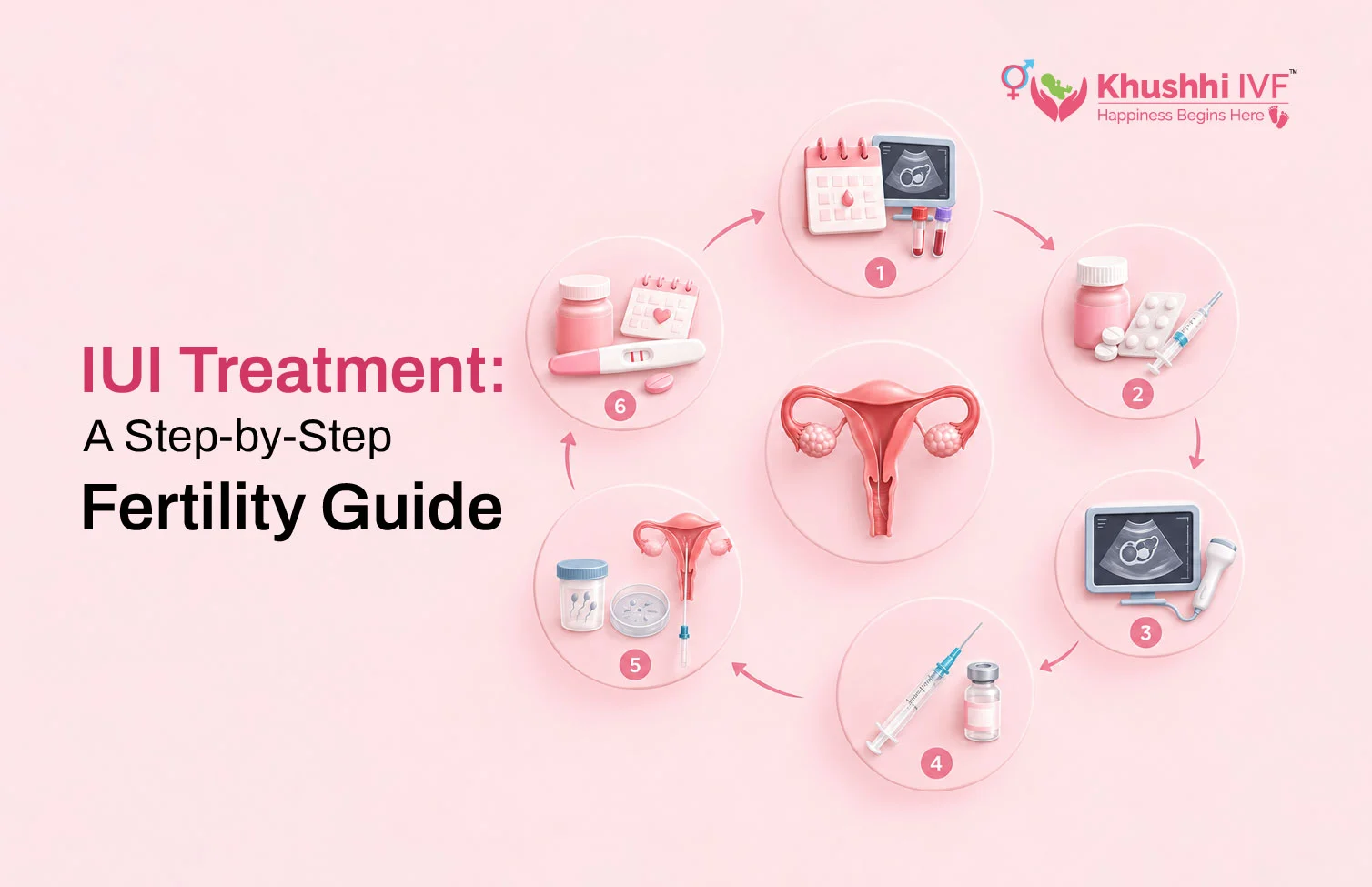
Step 1: Monitoring Ovulation
Timing is also very important with IUI. Your fertility specialist can use scans to monitor the development of follicles within your ovaries to help predict when you may be about to ovulate.
An injection may be used to induce ovulation; If this is advisable, it will be clarified at what point during your treatment your IUI is most likely to occur.
This period of your treatment may be made up of several appointments, so you may need to keep a record of these visits with any medications used.
Step 2: Preparing the Sperm
The male partner usually provides a semen sample on the day of the procedure. The sample is then taken to the laboratory for processing.
This is sometimes called sperm washing. The laboratory team separates the more active sperm from other components of the semen and prepares a concentrated sample for insemination.
If donor sperm is being used, the clinic will follow the appropriate process for preparing the sample.
Step 3: The IUI Procedure
Once the sperm sample has been prepared and the timing is right, the insemination is performed.
You will normally lie on an examination bed while the doctor gently places a thin catheter through the cervix. The prepared sperm is then released into the uterus.
The procedure itself is generally short. Most women do not need anaesthesia, although some may notice mild cramping or pressure during the process.
Afterwards, you may rest briefly before leaving the clinic. In most cases, there is no lengthy recovery period.
What Happens After IUI?
This part can sometimes feel like the hardest part because there is nothing you can do to know the result immediately.
The sperm still has to fertilise the egg, and the resulting embryo then needs to implant in the uterus. These are natural biological steps that happen after the procedure.
Some women may experience mild cramping or spotting afterwards. These symptoms alone cannot tell you whether the treatment has worked.
Your doctor will advise you when to take a pregnancy test. It is usually better to wait until the recommended date rather than testing very early.
How Successful Is IUI?
There is not a universal IUI success rate that can apply to all individuals considering the procedure. Other factors affecting a woman’s fertility rate include her age, egg quality and health, the quality of the man’s sperm, motivation for infertility treatment, and whether it is being combined with fertility medicines.
Some women get pregnant during their first IUI cycle; many may require more than one cycle. A fertility physician will be able to determine whether an additional IUI cycle would be appropriate versus another treatment, such as IVF therapy (in vitro fertilisation). This should be determined by considering a woman’s personal success rates, rather than a predefined number of treatments or a success statistic.
Is IUI Painful?
IUI is considered a minimally invasive procedure. Women usually feel it as “slightly uncomfortable” rather than painful. It will feel like a routine gynaecological checkup.
You might experience mild cramps, both during and immediately after the procedure.
These may settle by themselves. Inform your doctor immediately if you develop excessive bleeding, feel feverish, sick or experience a great amount of pain following treatment.
IUI Treatment at Khushhi IVF
Choosing a fertility clinic is an enormous decision, especially when you’re trying to achieve a pregnancy. Khushhi IVF offers a host of fertility options like IUI, IVF & ICSI, and first assesses the problem and then decides which course of treatment is best. This needs to be taken into account, as it is not a “one-size-fits-all” option. It may be reasonable for one couple to have this procedure, but not for another for whom IVF, etc., is a better first step. Khushhi IVF also looks at fertility assessments and male infertility diagnoses, including semen analysis, so that these factors can also be considered when investigating possible reasons for achieving a pregnancy.
If your case is considered suitable enough for IUI, it can be used as an additional procedure. The technique is relatively simple, but success rates vary because many factors influence it, most critically egg ovulation and sperm viability.
If you have been unable to achieve pregnancy naturally and are considering an IUI Treatment procedure, the first step will be a consultation with a fertility specialist. It can really clarify you further in the choice of fertility treatment when you already understand the test reports. At Khushhi IVF, a fertility specialist can evaluate your case and suggest a next step.
FAQs
1. Who can consider IUI treatment?
IUI may be considered for unexplained infertility, mild sperm issues, ovulation problems, certain cervical factors, or when donor sperm is required.
2. What happens during an IUI treatment procedure?
IUI involves monitoring ovulation, preparing the sperm sample, and placing the processed sperm directly into the uterus using a thin catheter.
3. Is IUI treatment painful?
IUI is generally a minimally invasive procedure. Some women may experience mild discomfort, pressure, or cramping during or shortly after the procedure.
4. How successful is IUI treatment?
IUI success varies based on factors such as age, egg quality, sperm quality, ovulation, and fertility medicines. A specialist can assess individual chances.