
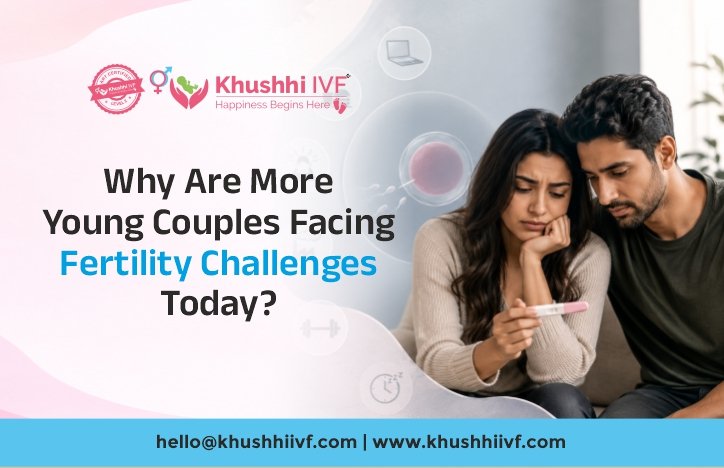
If you’ve been trying to conceive for more than two years, you may have found yourself asking a difficult question: “Why is this happening to us?”
You’re not alone.
Many couples imagine that pregnancy will happen naturally within a few months. When it doesn’t, the waiting can feel exhausting. Every month brings hope, followed by disappointment. Family gatherings, pregnancy announcements, and well-meaning advice can make the journey even harder.
The truth is that fertility challenges are becoming increasingly common among young couples. While this can feel overwhelming, understanding the possible reasons can be the first step toward finding answers and moving forward with confidence.
Why Is Fertility Becoming More Challenging?
Fertility is influenced by many factors. Often, there isn’t just one reason. Instead, several small factors may work together.
- Stress and Fast-Paced Lifestyles
Modern life is busy.
Long work hours, constant deadlines, irregular sleep schedules, and emotional pressure can affect overall health. While stress alone does not usually cause infertility, ongoing stress may influence hormone balance and reproductive health.
Think of your body like a smartphone running too many apps at once. When it’s constantly overloaded, some functions may not perform at their best.
- Changes in Diet and Physical Health
What we eat and how we care for our bodies can affect fertility.
Some common concerns include:
- Being significantly overweight or underweight
- Highly processed diets
- Lack of regular physical activity
- Vitamin and nutrient deficiencies
These factors can sometimes affect ovulation, sperm quality, and hormone balance.
- Hormonal Conditions Are More Commonly Detected
Today, conditions such as Polycystic Ovary Syndrome are diagnosed more frequently than before.
PCOS can affect ovulation, making it harder to predict fertile days. Other hormonal conditions involving the thyroid gland or reproductive hormones may also influence fertility.
The good news is that many hormonal issues can be managed effectively once identified.
- Male Fertility Factors
Fertility is not only a women’s health issue.
In fact, male factors contribute to a significant portion of infertility cases. Low sperm count, reduced sperm movement, lifestyle habits, smoking, excessive alcohol consumption, environmental toxins, and certain medical conditions can all play a role.
This is why fertility specialists often recommend evaluating both partners.
- Environmental and Lifestyle Exposures
Our daily environment has changed dramatically over the past few decades.
Exposure to pollution, chemicals, poor sleep patterns, excessive screen time, and sedentary lifestyles may influence reproductive health. Researchers continue to study how these factors affect fertility in both men and women.
The Emotional Side of the Journey
One of the hardest parts of infertility is the emotional uncertainty.
You may feel hopeful one day and discouraged the next.
Many couples experience:
- Anxiety during the two-week wait after ovulation
- Feelings of isolation
- Frustration when tests come back “normal”
- Guilt or self-blame
- Strain on relationships
These emotions are completely understandable.
Fertility challenges can affect not only your body but also your confidence, relationships, and sense of control. Seeking emotional support is just as important as seeking medical guidance.
When Should You Seek Help?
If you have been trying to conceive for more than two years without success, it may be time to explore a comprehensive fertility evaluation.
A fertility assessment can help identify factors affecting conception and create a clearer path forward.
Some evaluations may include:
- Hormone testing
- Ovulation assessment
- Ultrasound examinations
- Semen analysis
- Fallopian tube evaluation
Many couples are surprised to discover that there are answers available and treatment options they had never considered.
Fertility challenges are more common than many people realize. They do not reflect your worth, your effort, or your ability to become loving parents.
Every fertility journey is unique. Some couples need simple lifestyle adjustments. Others benefit from specialized fertility treatments. What matters most is finding the right support and guidance for your situation.
If you’ve been trying to conceive for over two years and are looking for answers, our clinic is here to listen, understand, and support you. Reach out for a consultation with our fertility specialists and take the next step toward understanding your fertility journey—at your own pace, with compassionate care every step of the way.
FAQs
1. Why are fertility problems becoming more common in young couples?
Several factors contribute to rising fertility challenges, including delayed parenthood, stress, unhealthy lifestyles, poor diet, obesity, smoking, excessive alcohol consumption, environmental pollution, and underlying medical conditions such as PCOS, endometriosis, or low sperm count. Early evaluation can help identify the cause and improve treatment outcomes.
2. Can stress really affect fertility?
Yes. Chronic stress can interfere with hormone production, ovulation in women, and sperm production in men. While stress alone may not cause infertility, it can make conception more difficult and may affect the success of fertility treatments.
3. How long should a young couple try before consulting a fertility specialist?
If a couple under the age of 35 has been trying to conceive for 12 months without success, they should consult a fertility specialist. If the woman is over 35, or if either partner has known reproductive health issues, seeking medical advice after 6 months is recommended.
4. Does infertility only affect women?
No. Infertility is a shared concern. Around 40–50% of infertility cases involve male factors, such as low sperm count, poor sperm motility, or abnormal sperm morphology. Both partners should undergo evaluation to determine the underlying cause.
5. Can lifestyle changes improve fertility naturally?
In many cases, yes. Maintaining a healthy weight, eating a balanced diet, exercising regularly, managing stress, getting adequate sleep, avoiding smoking and excessive alcohol, and limiting exposure to environmental toxins can improve reproductive health. However, if conception is still delayed, consulting a fertility specialist is important to explore appropriate treatment options.